








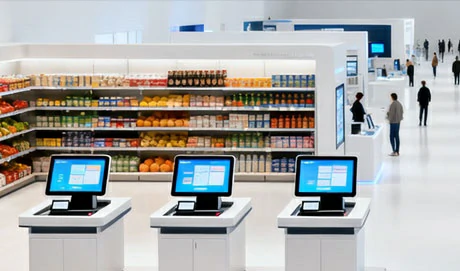








With the continuous advancement of science and technology, intelligent electronic scales have gradually replaced traditional mechanical scales, becoming the mainstream products in the weighing field. Particularly in the fresh food retail sector, smart electronic scales have gained prominence due to their stronger demand for real-time price management, food safety traceability, data collection, and analysis. Known as AI-powered fresh food visual scales, these products integrate traditional electronic scales with additional cameras and commodity identification modules. By employing AI visual recognition technology, they automatically identify categories of fruits and vegetables in images, display several highly matching options on the touch screen, allow customers to select the correct product, complete one-touch weighing, and finally print labels or send the product information directly to the cashier system.
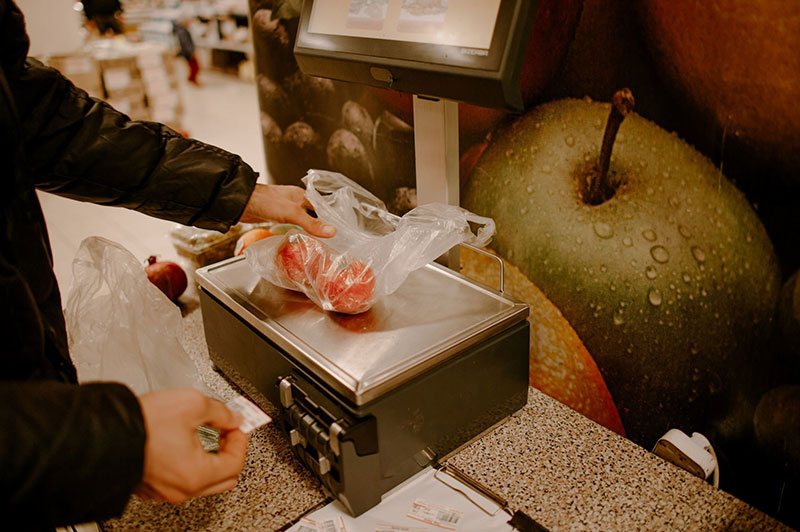
The touch screen plays a crucial role in the design of smart electronic scales, enhancing the user experience and providing additional functionalities. Most smart electronic scales feature a 15.6-inch capacitive touch screen as the primary display. Compared to standard capacitive touch screens, those configured for smart electronic scales have the following key features:
1.Full High Definition (FHD)
With a resolution of 1920x1080 (approximately 2.07 million pixels), FHD ensures sharp, detailed images and vibrant colors. This clarity allows a variety of product images and text information to be displayed clearly, making it easier for customers to read and select items.
2.Water and Oil Resistance
In environments with high humidity and oil exposure, such as fresh food markets, touch screens without water and oil resistance are prone to damage. A water- and oil-resistant touch screen ensures durability against these elements and allows for frequent cleaning with chemicals and friction, significantly extending its service life.
3.Support for Diverse Scenarios
These touch screens support additional functionalities, such as built-in audio for cash register beeps or advertising music, and under-screen NFC for compact designs and improved payment experiences. Leveraging these multi-functional capabilities can reduce production and installation costs while simplifying maintenance and management.
To further enhance the customer experience, some smart electronic scales adopt a dual-screen design. Customers can view product weights and prices on a secondary screen, while merchants can display product information and promotional content. Commonly used specifications for secondary screens include 7-inch, 10.1-inch, and 15.6-inch displays, featuring:
1.High Brightness
Ensures clear visibility of screen content in brightly lit environments.
2.Wide Viewing Angle
Allows customers of varying heights to comfortably view screen information.
3.Low Power Consumption
Reduces energy usage and minimizes heat generation, ensuring long-term device operation.
With the continuous advancement of science and technology, intelligent electronic scales have gradually replaced traditional mechanical scales, becoming the mainstream products in the weighing field. Particularly in the fresh food retail sector, smart electronic scales have gained prominence due to their stronger demand for real-time price management, food safety traceability, data collection, and analysis. Known as AI-powered fresh food visual scales, these products integrate traditional electronic scales with additional cameras and commodity identification modules. By employing AI visual recognition technology, they automatically identify categories of fruits and vegetables in images, display several highly matching options on the touch screen, allow customers to select the correct product, complete one-touch weighing, and finally print labels or send the product information directly to the cashier system.
The touch screen plays a crucial role in the design of smart electronic scales, enhancing the user experience and providing additional functionalities. Most smart electronic scales feature a 15.6-inch capacitive touch screen as the primary display. Compared to standard capacitive touch screens, those configured for smart electronic scales have the following key features:
1.Full High Definition (FHD)
With a resolution of 1920x1080 (approximately 2.07 million pixels), FHD ensures sharp, detailed images and vibrant colors. This clarity allows a variety of product images and text information to be displayed clearly, making it easier for customers to read and select items.
2.Water and Oil Resistance
In environments with high humidity and oil exposure, such as fresh food markets, touch screens without water and oil resistance are prone to damage. A water- and oil-resistant touch screen ensures durability against these elements and allows for frequent cleaning with chemicals and friction, significantly extending its service life.
3.Support for Diverse Scenarios
These touch screens support additional functionalities, such as built-in audio for cash register beeps or advertising music, and under-screen NFC for compact designs and improved payment experiences. Leveraging these multi-functional capabilities can reduce production and installation costs while simplifying maintenance and management.
To further enhance the customer experience, some smart electronic scales adopt a dual-screen design. Customers can view product weights and prices on a secondary screen, while merchants can display product information and promotional content. Commonly used specifications for secondary screens include 7-inch, 10.1-inch, and 15.6-inch displays, featuring:
1.High Brightness
Ensures clear visibility of screen content in brightly lit environments.
2.Wide Viewing Angle
Allows customers of varying heights to comfortably view screen information.
3.Low Power Consumption
Reduces energy usage and minimizes heat generation, ensuring long-term device operation.


 关闭返回
关闭返回